


Dear Friends & Family,
There was a time when the rock band Queen printed a small note on the back of their albums:
“No Synthesisers!”
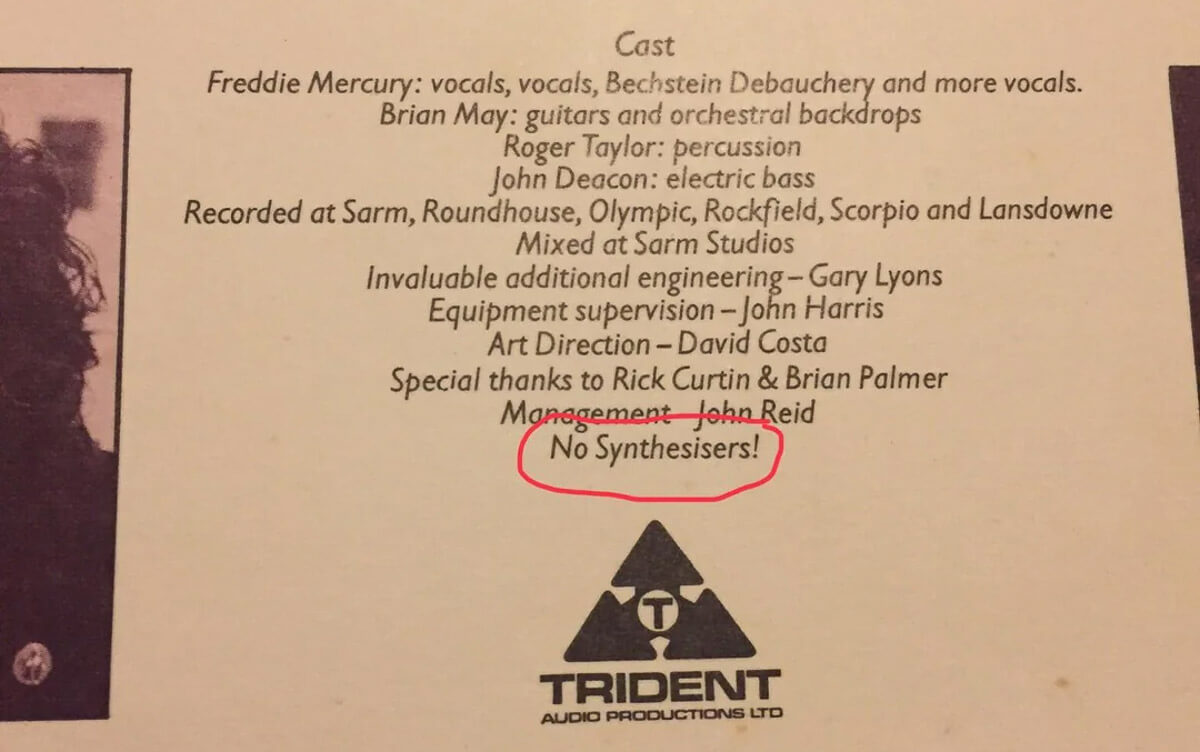
No electronic shortcuts. No artificial sounds. Just musicians, instruments, and craftsmanship. And, of course. Freddie Mercury’s unique voice.
And then came the Flash Gordon album in 1980.
Suddenly, synthesizers were everywhere. Because eventually, even the purists surrender to technological progress.
Something similar may now be happening to one of the most idealistic corners of the internet: open-source software.
For decades, open source was held together by volunteers. Developers maintaining libraries at night after work. Engineers fixing obscure bugs for free. Entire chunks of the internet quietly running on software maintained by one exhausted person in Finland or Nebraska.
It was never a model optimized for money but for contribution.
But AI coding changes the economics completely.
When a sensible prompt can generate patches, review pull requests, write tests, and refactor codebases in minutes, the old human-speed maintenance model begins to look obsolete.
The old open-source loop depended on maintainers reading, triaging, debating, patching, and documenting one issue at a time.
That loop does not survive AI-speed development.
The operational layer is shifting toward autonomous maintenance systems that improve themselves continuously.
The big risk is that young developers will not understand their code base anymore. Maybe that is where the old guard still comes in. But for how long?
(Dear reader, rest assured that this newsletter is still written by a carbon-based lifeform based in Frankfurt with a little editing help from @sama.)
Eating our own dog food
When I worked at Mars (the food company, not the planet) in the pet food division, there were regular tasting panels on the production line to assess product quality.
And although I witnessed fewer examples than the stories suggested, people occasionally did taste the pet food coming straight off the line.
So for me, “eating your own dog food” was always meant quite literally.
In technology, of course, it means using your own products internally.
For us in venture capital, it means something slightly different.
It means understanding AI tooling deeply enough to separate genuine technological leverage from pitch-deck theatre.
Last summer, we started building our own internal AI-native infrastructure.
What began as a relatively modest fund administration system, mainly designed to reduce manual work and improve transparency, evolved surprisingly quickly.
Nine months later, we now operate a fully integrated internal platform that includes fund accounting, direct banking integrations, portfolio monitoring, an AI-assisted sourcing engine reviewing roughly 25,000 companies annually, a proprietary CRM more powerful than Affinity or Attio, compliance workflows, automated reporting systems, and a growing set of agentic internal tools.
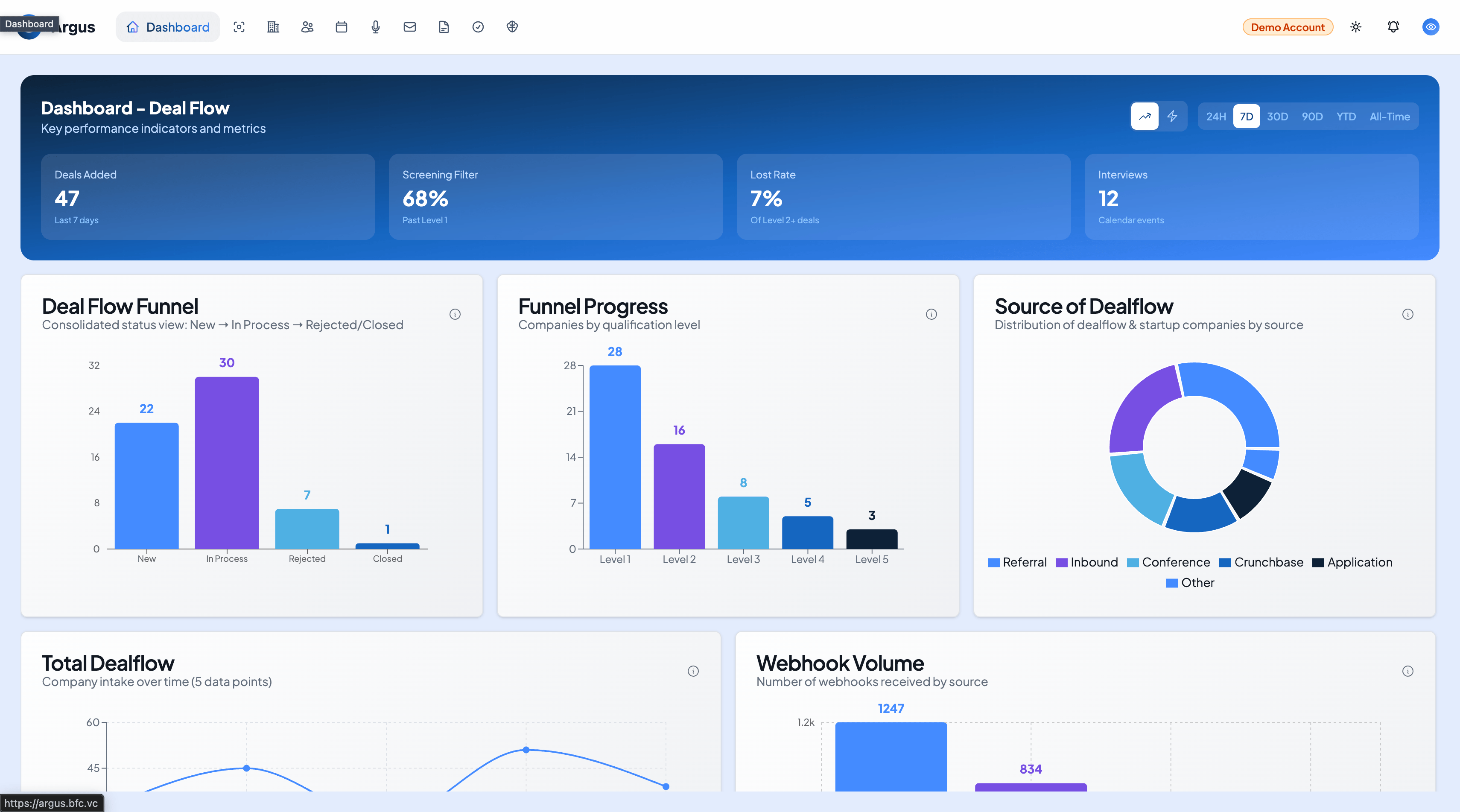
In practical terms, this means we were able to say goodbye to a significant amount of external SaaS infrastructure, resulting in substantial savings on external software and services and, at the same time, a huge step-up in quality.
But more importantly, it changed how we think.
Once you begin rebuilding your own operational stack, you stop treating workflows as fixed. You start questioning everything.
Why does this process exist? Why does this require human intervention? Why are five tools connected through fragile Zapier chains when one agentic workflow could handle the entire loop?
The secondary effects proved even more valuable than the cost savings.
First, we gained significantly more operational control.
Understanding every moving part of our own back office revealed surprising inefficiencies that go unnoticed when outsourced to third parties.
Second, and far more importantly, living through the AI coding revolution ourselves dramatically sharpened our perspective as investors.
It is one thing to hear founders talk about AI-native products. It is another thing entirely to spend nine months building these systems.
You develop intuition around timelines, bottlenecks, hallucination risks, infrastructure costs, where agents work remarkably well, and where human supervision remains absolutely essential.
One key insight from our AI coding journey was how often these models produced contradictory or incomplete outputs. We found that sparking a rigorous back-and-forth between Claude, Codex, and Gemini consistently led to better results than relying on a single model alone. While this approach increased token usage, the improvement in overall quality more than justified the cost.
The gap between AI-native and AI-labeled startups becomes much easier to spot.
Experiencing that transition firsthand was one of the most valuable exercises we could have undertaken as a fund.
And it tasted really good!
Are we in a bubble?
At the recent Y Combinator Demo Day in San Francisco, our colleague Ben saw roughly 200 founders compete for the attention of the venture ecosystem.
Many had launched MVPs only weeks earlier.
Some were already commanding valuations of $40m or more, up from roughly $25m just a year ago.
To make those numbers work mathematically as a pre-seed/seed investor, you need to believe in one of two things:
Either enormous future market expansion or extraordinary monetary inflation.
Given that perhaps 90% of these companies will fail, the pricing can feel detached from reality.
And yet, venture capital has always operated differently from traditional finance. Power laws forgive almost everything.
If one company returns 1,000x, the graveyard barely matters.
At the same time, public markets continue to display a remarkable ability to ignore geopolitical instability.
Wars escalate. Debt expands. Political systems fragment. And equities continue climbing.
Narratives remain stronger than fundamentals until suddenly they don’t.
Recently, while preparing an investor fireside chat on the historical importance of venture capital to technological progress, I researched early forms of risk financing.
People often think venture capital began in Silicon Valley. It did not.
Queen Isabella of Castile financed Christopher Columbus.
The Fugger family financed emperors.
The Rothschilds financed industrial expansion across Europe.
Civilization has always advanced through people willing to fund uncertain but transformative ideas.
And even when a bubble burst, the outcome was often very positive for technological progress.

What struck me most was the parallel between Isabella financing Columbus and Peter Thiel, alongside early Google executives, financing SpaceX over two decades ago.
Both looked irrational at the time. Both ended up expanding humanity’s frontier.
Ad astra.
Portfolio Updates
Many of our founders are having an extraordinary year.
And interestingly, some of the strongest signals are not fundraising announcements.
They are revenue figures. Customer adoption. And increasingly: break-even operations.
The first quarter has been highly encouraging across parts of our portfolio.
While new financing rounds provide external validation from the investment ecosystem, there is ultimately nothing more convincing than customers voluntarily sending money your way.
Revenue remains the purest form of product-market feedback.
One thing we have consistently believed, long before AI dramatically reduced software development costs, is that lean company structures create strategic freedom.
A company that controls its burn controls its destiny.
The AI era may produce enormous winners, but it also dramatically lowers the cost of experimentation.
As a result, smaller teams can now reach escape velocity with surprisingly little capital.
Quietly, more and more of our portfolio companies are approaching or achieving break-even far earlier than would have been imaginable just a few years ago.
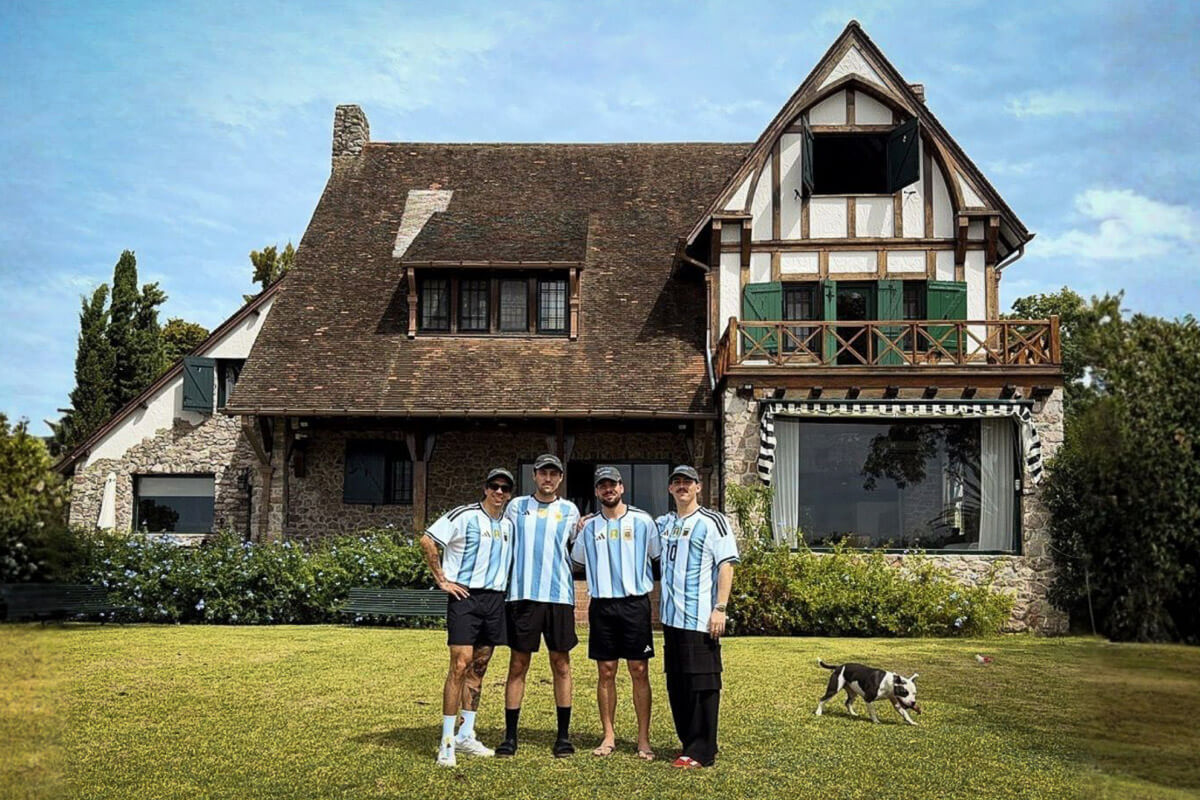
One founder who took this philosophy to an extreme is Lucas Moscon.
Frustrated by the coordination overhead of remote work, he rented a house outside Buenos Aires and moved the entire team there for six months.
The “Appstack House” compressed communication loops, accelerated feature releases, and created the kind of velocity founders usually only promise in pitch decks.
Except this time, the revenue graph he recently sent back to his investors actually was real.
Fund I is fully deployed — Preparing for Fund II
We ran out of money. And that is a very good thing.
Fund I is now fully deployed, and we are preparing for Fund II.
It is remarkable to look back and remember that we launched Fund I before generative AI became mainstream.
And yet, roughly one-third of our portfolio today is fully AI-native, while virtually every company is integrating AI workflows into daily operations.
For Fund II, our central thesis is straightforward:
“We invest early in founders rebuilding how money, markets, and businesses work.”
That naturally includes AI, but also blockchain applications, robotics, financial tooling, and technologies we cannot yet fully predict.
Because ultimately, the technology itself matters less than the founder’s ability to gravitate toward the right tools for the problem at hand.
Great founders adapt. Technologies change. Conviction compounds.
Which is why you will increasingly see BFC standing not only for Blockchain Founders Capital, but also:
Built From Conviction.
What will not change is our obsession with underappreciated founders.
Not necessarily Ivy League. Not necessarily Silicon Valley. Not necessarily Y Combinator-backed (of course, we love our Y Combinator teams and Stanford graduates just as well).
We continue to believe some of the best opportunities emerge where competition for attention remains inefficient.
Investing is fundamentally about asymmetry. Buying into a trillion-dollar company like SpaceX may sound like a good investment.
But upside becomes mathematically constrained.
We would still rather back a $10m company with extraordinary founders and the potential to become a $250m business.
That remains the game we enjoy playing most.
How will history judge our generation?
I cannot remember another period in my lifetime where old systems simultaneously appeared so fragile while new technologies offered so much leverage.
Entire industries are being rebuilt in real time.
Some AI superstars of today may eventually look like the AOLs or Netscapes of this cycle.
And entirely unexpected winners will emerge from places where few people are currently paying attention.
Periods like this are uncomfortable, but they are also deeply exciting.
We are extraordinarily grateful to our founders, investors, and friends who allow us to be a small part of this transition firsthand.
History rarely feels historic while you are living through it. This one does.
Onwards and upwards,
Wolfgang (Frankfurt) with Ben (Mexico City and San Francisco), and Sagar (Munich)