Subscribe to our Newsletter
Stay in the loop with updates on investments, portfolio firms, and events.



Friends & Family BFC Notebook #20
Dec 7, 2025
|
10 mins
Dear Friends & Family,
Do not become a unicorn startup.
That was my opening advice at a lecture I recently gave at the Technical University of Munich, better known as “TUM”.
TUM has every right to brag: it ranks among those universities with the highest number of unicorn founders in the world.
An impressive metric, no doubt.
.jpg)
But beyond the obvious dilution founders face when they take too much capital too early, most people, founders and early-stage investors alike, forget the one thing that can turn your stake into dust when the smallest part of the plan goes wrong (and it usually does): liquidation preference.
This stack sits on top of the cap table like a silent tax waiting to be paid.
Liquidation preference is a threat to unicorn-valued startups because the headline valuation can feel like fake money once you look at who gets paid first, how much, and under what conditions.
You can be “worth” €1bn on paper today and still be structured in a way that only a €2–3bn exit creates real wealth for common shareholders.
Everything in between mainly serves to repay preferred capital.
Which brings me to a broader pattern we’re seeing right now: a bifurcation in venture funding.
On one side, venture capital is concentrating into fewer, larger bets.
On the other side, the cost of building something has dropped sharply.
A team of three, using off-the-shelf models and a modest cloud bill, can now ship in weeks what previously needed dozens of engineers and a full year of burn.
Capital is clustering; creation is decentralising.
If that sounds like a contradiction, it is only because the old sequence, raise first, then build, has quietly reversed.
The new order is to build first, then decide whether to raise. Ten years ago, money bought you the right to experiment.
Today, experimentation is cheap and widely available; money buys you speed at scale, distribution, and more and more, also the narrative halo that attracts talent and customers.
The question for founders is less “can we get funded?” and more “is funding really the bottleneck we have?”
There is a historical echo here that the older ones will remember.
In the early internet days, compute and bandwidth were scarce, so capital flowed to those who could afford servers and sales teams.
Once infrastructure became abundant, value moved up the stack, to teams who could design products people wanted and iterate faster than big incumbents could organise themselves.
AI is doing something similar now, shrinking the distance between idea and working prototype.
The pull of big rounds does not change that. It only shows how expensive it still is to dominate a market once you have proven that a market exists.
The winners of this cycle will be those who build early, learn fastest, and raise late, if at all.
As a small early-stage fund, this is exactly what we look for.
Founders who operate in a very capital-efficient way. Those who need little money to prove they are onto something that people want.
In public markets, unicorn status is a wonderful thing (once the lock-up period is over).
In private markets, it can be a burden.
And don’t get me wrong - we love unicorn valuations (especially in our own portfolio).
But we prefer sustained, controlled growth over a flash-in-the-pan, driven by enormous customer acquisition costs and with no proven product-market fit.
Just ask the hundreds of zombie unicorn founders.
Portfolio Updates
We are very glad to welcome Silas, based in London.
Sometimes the best companies start in a simple way: someone looks at a process and thinks, “There has to be a better way.”
That is exactly what Silas founder Maariyaah Afzel thought when she was working as an underwriter.
.jpg)
Underwriting is the place where insurers make, or lose, money.
So any technology that improves efficiency, accuracy, and contract certainty goes straight to the bottom line. A missed clause is not a small error; it can cost millions.
The timing is also right. Insurers are dealing with soft market conditions, a real shortage of underwriting talent, and rising cost pressure. At the same time, AI adoption has moved from a nice-to-have to a board-level priority.
We are very happy to back Maariyaah alongside UK fintech veterans like Alan Morgan and Mark Ransford.
Their support underlines the scale of the opportunity and Maariyaah’s unusually strong founder-market fit.
And then there’s herita in Berlin.
Sometimes innovation means inventing something new. Other times, it means taking a centuries-old idea and rebuilding it for the digital age.
Herita is doing the latter. They are bringing back one of the oldest financial instruments in history: the Bill of Exchange.
When Christoph Iwaniez first told us about this idea around 12 months ago, in the snowy mountains of Davos, we were intrigued, but we still had a few questions.
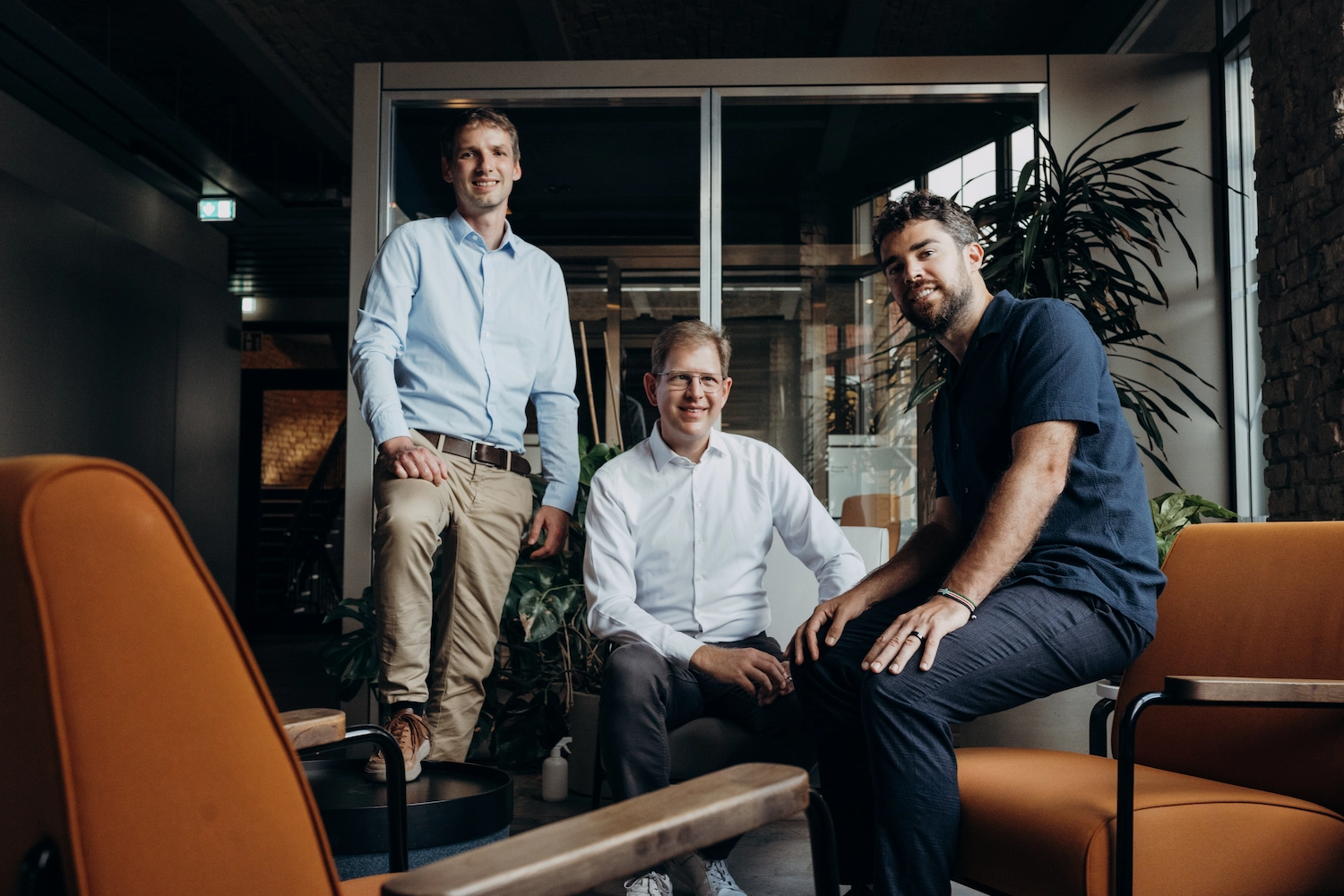
A year later, after getting to know his co-founders Felix Kollmar and Ben Jones, and after seeing the massive interest from potential clients, we were convinced.
At BFC, we like founders who work at the intersection of the old and the new.
People who understand how things used to function and who can explain why they should function again, just with better infrastructure. Christoph and his colleagues are exactly that type.
They are reactivating an institution of commerce that outlived empires, and giving it a blockchain-grade reboot.
Because sometimes the future of finance is not about inventing something new.
It is about finally fixing something that used to work and making it work again.
Recommended
“Each wave seduces us into thinking that we’ve learned from history and that this time we can’t be fooled. Then it happens again. This is how it happened in 1929.”
Nothing beats a good book in the quiet year-end holiday season.
.jpg)
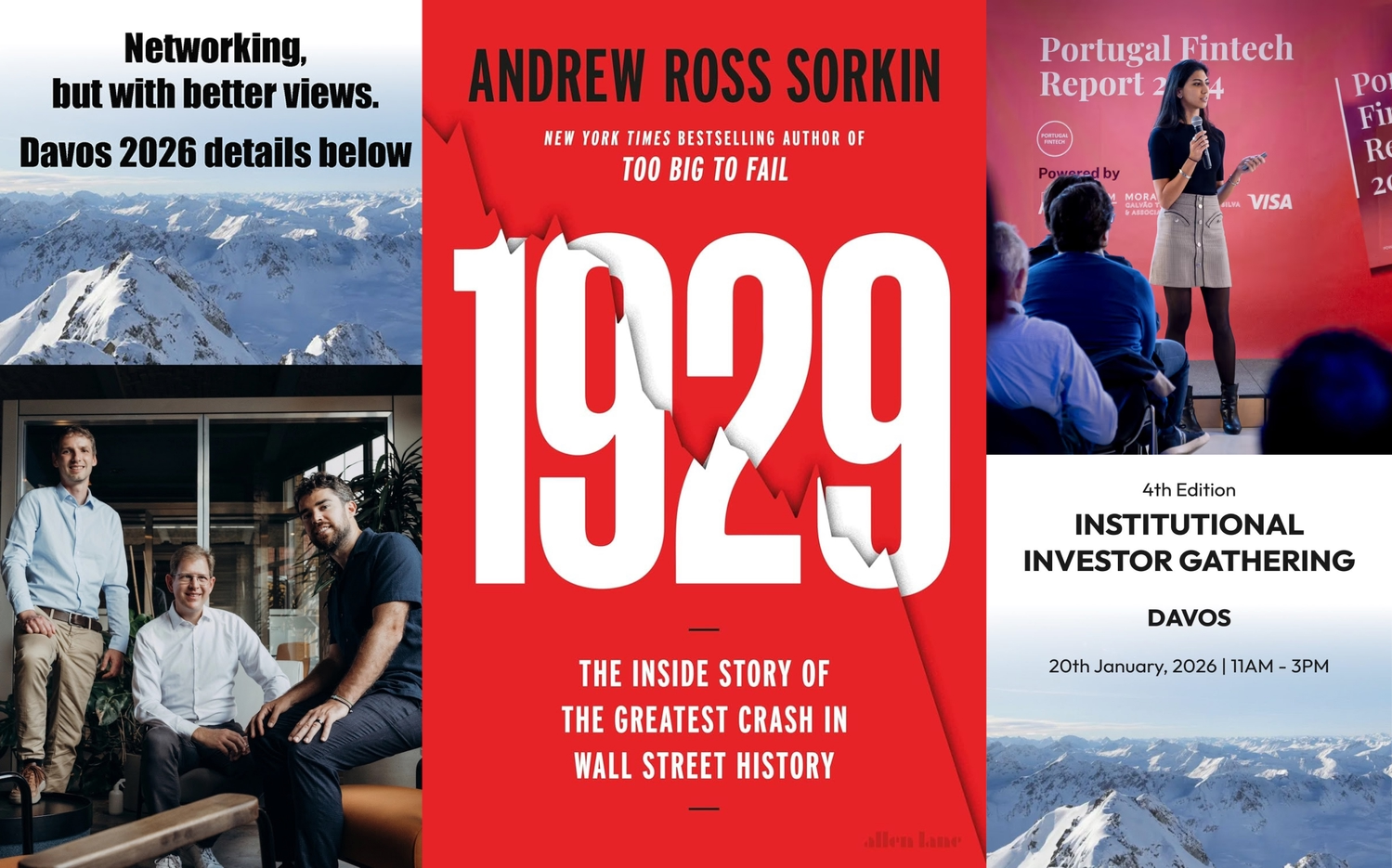
If you are wondering whether AI is a bubble waiting to pop, or simply an exaggeration that will correct itself, you might want to pick up “1929” by Andrew Ross Sorkin.
When Sorkin writes about that year, it often feels like he is describing 2025.
Against a backdrop of AI exuberance, fast-moving capital, and ever-looser retail access, the book reads almost like a diagnostic tool: you begin to notice the same psychological patterns and incentive failures that show up before every major bubble.
For founders and investors, “1929” is both highly entertaining and quietly useful.
It is a reminder that while technology changes, human behaviour in markets barely does.
Markets don’t crash for financial reasons.
They crash when the narrative breaks.
Coming up: Institutional Investor Gathering Davos 2026
.jpg)
For the fourth time, we are hosting our Institutional Investor Gathering event in Davos during the week of the World Economic Forum, at the beautiful Seehof Hotel.
As every year, we will have some familiar faces and quite a few new ones. It never gets boring.
If you are in Davos during the week of January 19–22, 2026, we would love to meet you there.
Final Closing of Our Fund I on February 15, 2026
If there is one thing we are immensely thankful for and proud of, it is the lineup and personal connection we have with our investors.
Almost all of them have their own entrepreneurial journeys, have built companies, managed large investment portfolios, or contributed to the invention of medical breakthroughs.
They all share a passion for founders building something new using the latest technology and their domain insights, understanding full well that it is never a straight line from zero to one. But it’s always worth the effort.
If you recognise yourself in this and would like to become part of this network, contact any of us. We are closing our fund for new investors in two months.
Season’s Greetings
Whether you celebrate Christmas, another holiday, or simply enjoy the
season, we wish you peace, joy, and a wonderful start to the new year.
To our incredible founders, investors, advisors, and friends - Thank you for believing in us, challenging us, and being a part of our journey.
Here’s to a healthy, happy, and curious 2026!
Warmest regards,
Wolfgang (Frankfurt) with Ben (Taipeh), Marcel (Munich), and Sagar (Munich)